When businesses talk about the benefits of office plants, much of the evidence in Australia traces back to one of the most widely cited local studies: the University of Technology Sydney’s indoor plant research. In its landmark report, UTS explored how indoor greenery influences workplace wellbeing, air quality and employee comfort.
Led by the UTS Plant and Indoor Environmental Quality Research Group, this work helped reshape how workplaces think about greenery — not as decoration but as an evidence-based part of healthier indoor environments.
The findings are clear.
Indoor plants support workplace wellbeing, cleaner indoor air and stronger employee comfort, with benefits extending into schools, healthcare spaces and community environments across Australia.
What did the UTS indoor plant study find?
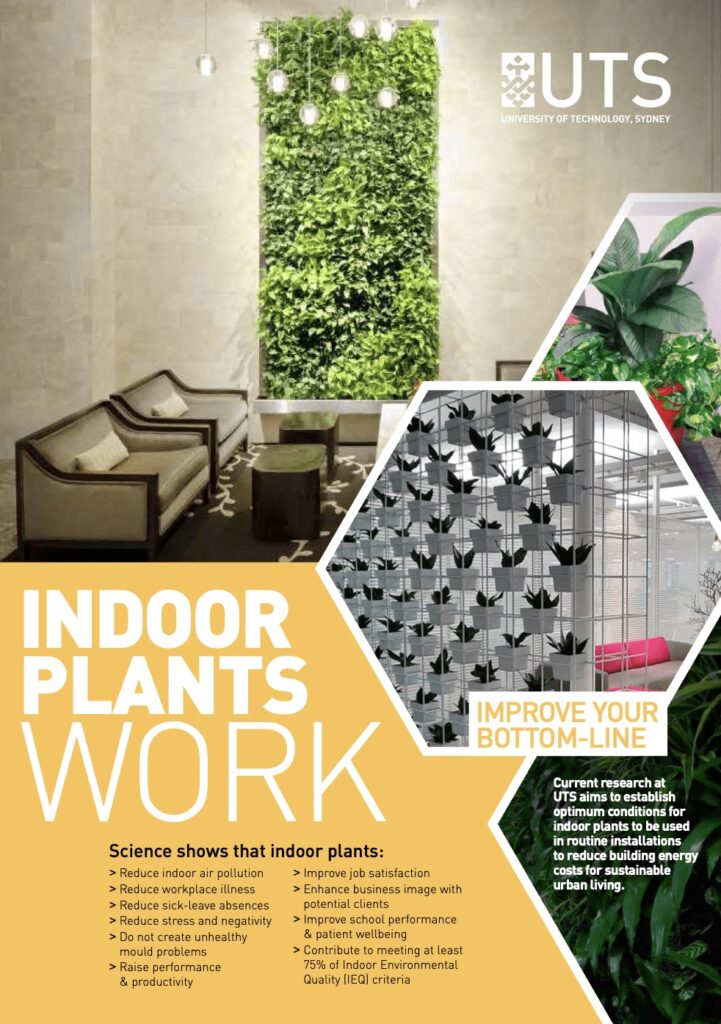
The UTS report Indoor plants work: improve your bottom-line highlighted several measurable benefits of indoor plants in office environments.
According to the report, indoor plants can help:
- improve job satisfaction
- reduce workplace stress and negativity
- reduce sick leave absences
- improve business image
- raise performance and productivity
- reduce indoor air pollution
- support patient wellbeing and school performance
This is one of the reasons the UTS indoor plant study remains such an important reference point for businesses looking at workplace wellbeing design.
Cleaner air supports clearer thinking
One of the strongest sections of the UTS report focuses on indoor air quality.
The researchers found that 3 to 6 plants per office kept VOC levels below 100 parts per billion, a level described as negligible health risk under Australian recommendations.
The study also reported carbon dioxide reductions of 10 per cent or more in office settings.
This matters because indoor air quality directly affects how people feel at work.
Poor indoor environments are often linked to headaches, sore eyes, fatigue, reduced concentration and what is commonly referred to as sick building syndrome.
In simple terms, cleaner air often means clearer thinking.
That connection between plants and cognitive comfort is one of the most practical benefits for modern workplaces.
The wellbeing impact of office plants
Beyond air quality, the UTS research strongly supports the role of plants in reducing workplace stress.
The report draws on medical and workplace studies showing that plants help reduce:
- tension
- feelings of negativity
- fatigue
- stress-related discomfort
- absenteeism linked to workplace illness
This is where the community value of the research becomes especially important.
The findings are not only relevant to corporate offices.
They extend to shared spaces where people spend long hours indoors — schools, clinics, administration spaces and reception environments.
Plants help these places feel calmer, softer and more human.
That is as much a community outcome as it is a design one.
A key myth the UTS report addressed
One of the most useful parts of the UTS research is that it directly addressed a common concern around mould.
The study found that conservative numbers of indoor plants did not significantly contribute to indoor mould spore counts in office buildings.
That is an important fact for facilities teams and workplace managers.
It reinforces that professionally maintained plant installations can support healthier environments without introducing the issues people sometimes assume.
Why this research still matters in Australia
The UTS report remains one of the strongest Australian sources supporting the benefits of plants in workplaces.
Its importance lies not only in the science but in the way it reframed plants as part of workplace wellbeing infrastructure.
For Australian businesses focused on culture, staff experience and healthier spaces, the message remains highly relevant: well-designed indoor greenery helps people feel better at work.
Read the full report:
The bigger picture: Sustainability that people can feel
While sustainability is often measured in carbon reduction, energy efficiency and resource savings, its impact is also experienced at a human level.
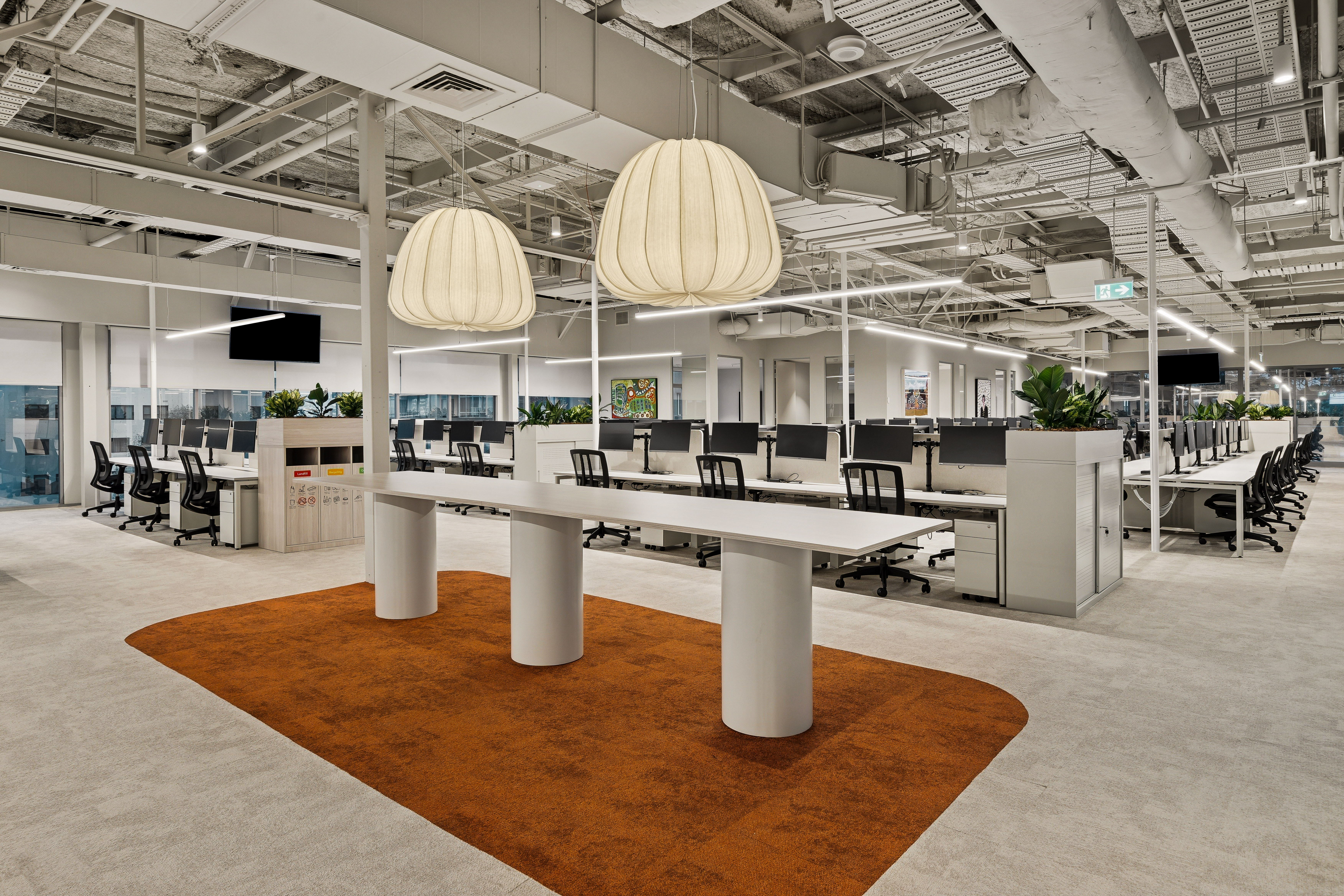
Workplaces that incorporate natural elements tend to feel calmer, more comfortable and more visually balanced. Employees often report improved focus and satisfaction in environments where greenery is thoughtfully integrated into the design.
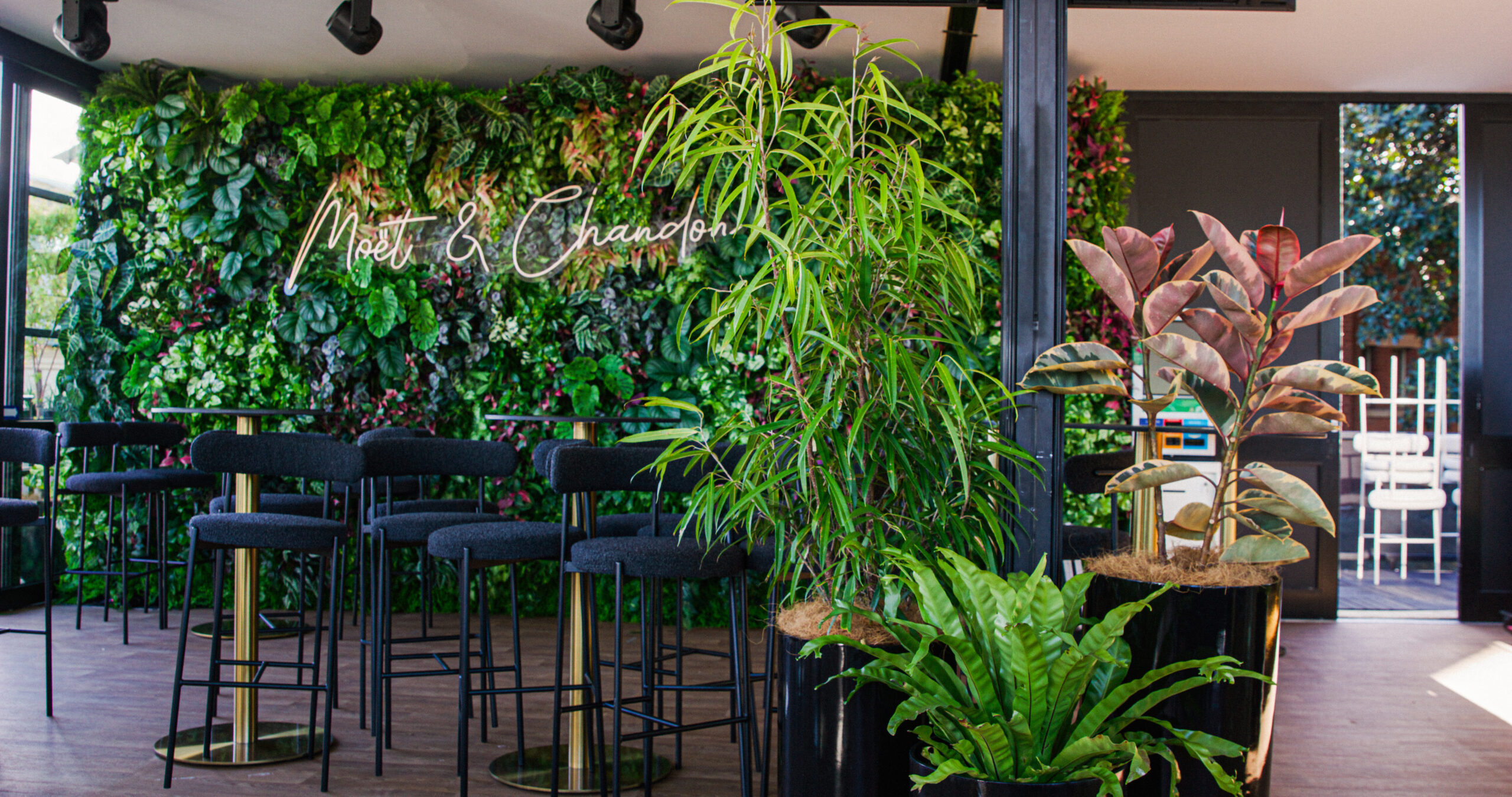
Clients and visitors notice it too. A well-designed green space signals care, intention and attention to detail—values that increasingly influence how businesses are perceived.
Sustainability, at its best, is not just something a building achieves. It’s something people can feel the moment they walk through the door.
Read the full report:
Frequently asked questions
Do indoor plants improve office air quality?
Yes. UTS research reported reductions in VOCs and carbon dioxide levels, helping support cleaner indoor air and improved occupant comfort.
How many office plants do you need to see benefits?
UTS research found that 3 to 6 plants per office were enough to keep VOC levels at negligible health risk levels.
Do indoor plants improve office wellbeing?
Yes. The UTS indoor plant study found that plants help reduce stress, improve job satisfaction and contribute to healthier indoor environments in workplaces.