There’s always one space in every office that doesn’t quite behave like the rest — a meeting room tucked behind glass, a corridor that stretches longer than expected, or a workstation sitting just far enough from the windows that daylight never really settles there. Plants get placed in these spaces anyway and most of the time they slowly struggle, not because the space is wrong but because light doesn’t always reach where people think it does.
Low light isn’t what people think it is
Low light in offices rarely feels like low light. It feels normal, usable, fine. Technically, it often sits under 100 foot-candles, with many internal zones closer to 50–75 but in practical terms it is simply light that never quite becomes direct sun.
A room can feel bright enough to work in all day and still be too dim for most indoor plants to perform properly. Human perception of brightness and plant usable light are not the same thing, and that gap is where most misunderstandings begin. People adjust without thinking, while plants respond far more literally to what is actually available.
How plant placement actually goes wrong
One of the most common patterns seen in commercial offices is how plants are placed before the space is fully understood. A plant is added to soften a reception area, a row is installed in a corridor that feels empty, or a desk plant appears as part of a fit-out finishing touch. It all makes sense at the time.
But offices don’t stay still. Light shifts throughout the day, glass reflects brightness that doesn’t actually land on surfaces, and furniture moves in ways that can quietly block what little light was there to begin with.
Fact: office lighting conditions change more often than people realise, even without renovations.
Sydney micro-story: the meeting room that looked bright but wasn’t
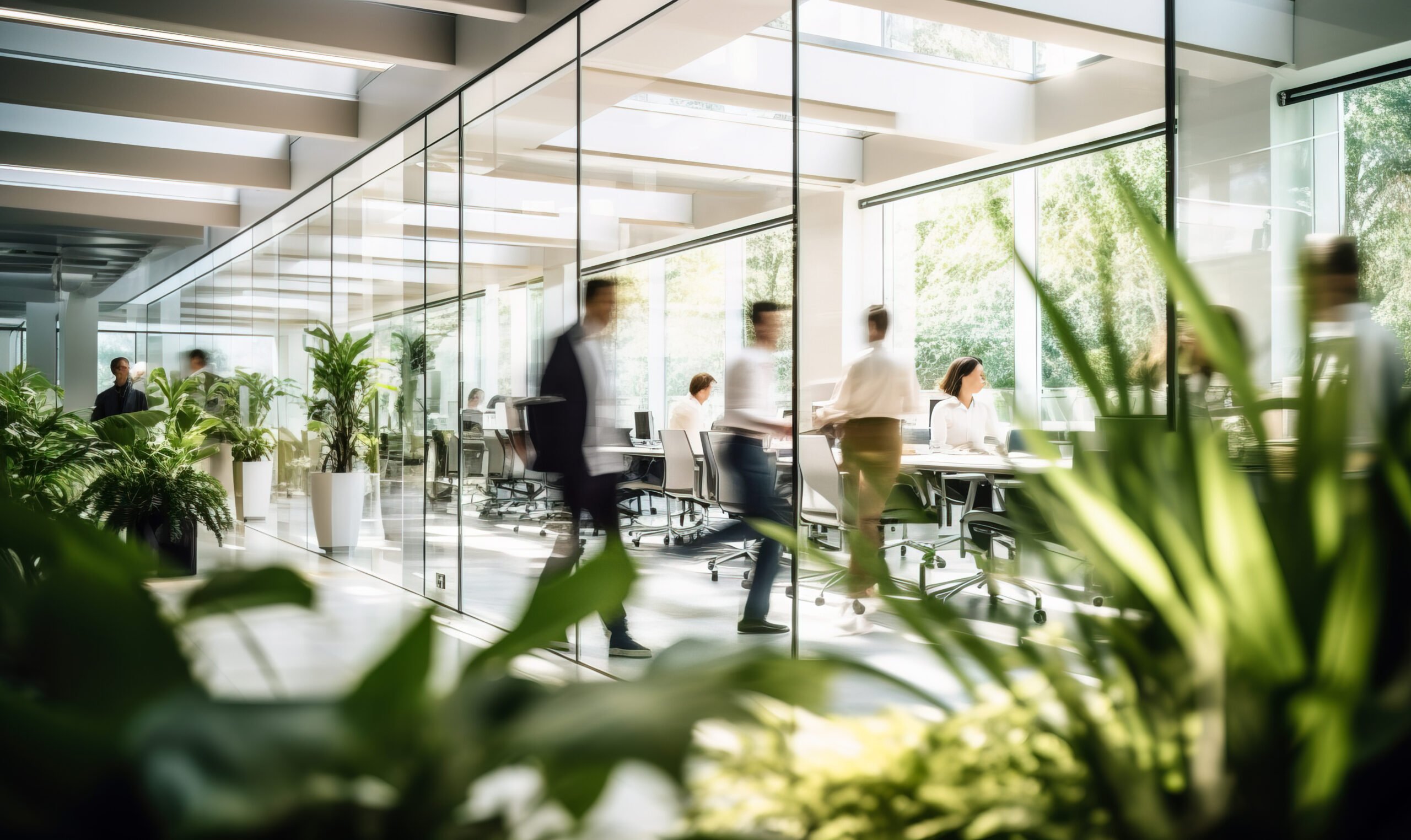
In one Sydney CBD office, a meeting room was described as one of the brightest in the building. Full glass walls, open feel, plenty of natural light at first glance. But every plant placed inside it struggled.
What looked bright was actually filtered light bouncing off surrounding buildings. By mid-afternoon, the room sat in consistent low light without anyone really noticing. The plants didn’t fail suddenly. They simply weakened over time, gradually losing strength as conditions didn’t match what they needed.
Once shade-tolerant species were introduced and placement was adjusted, the change wasn’t dramatic. It was steady. The space didn’t transform — it simply stopped working against what was in it.
The plants that keep showing up in low-light offices
After a while, patterns become hard to ignore. Certain plants appear again and again in shaded interiors, not because they are fashionable but because they continue to function where others don’t.
Dracaena varieties eg. Marginata are one of the most common. Upright and structured, they’re often used in corridors and reception areas where height and form matter. In lower light, plain green varieties tend to perform more reliably than variegated types, which depend on stronger light to maintain contrast.
Sansevieria, or snake plant, is almost unremarkable in how consistent it is. It tolerates dry air, inconsistent watering and artificial lighting without much change in appearance, which is why it often ends up in interior zones where conditions are not ideal but still need greenery.
Zanzibar gem, or ZZ plant behaves differently again. It doesn’t show rapid growth or visible change, which is often misunderstood as inactivity. In reality, it is storing energy in its roots, allowing it to persist through long periods of low light with very little visible stress.
Chinese evergreen eg. Aglaonema White softens enclosed spaces where light drops off deeper into a floorplate, while cast iron plant sits at the far end of resilience — slow, steady and still present long after others have faded.
Why plants actually struggle indoors
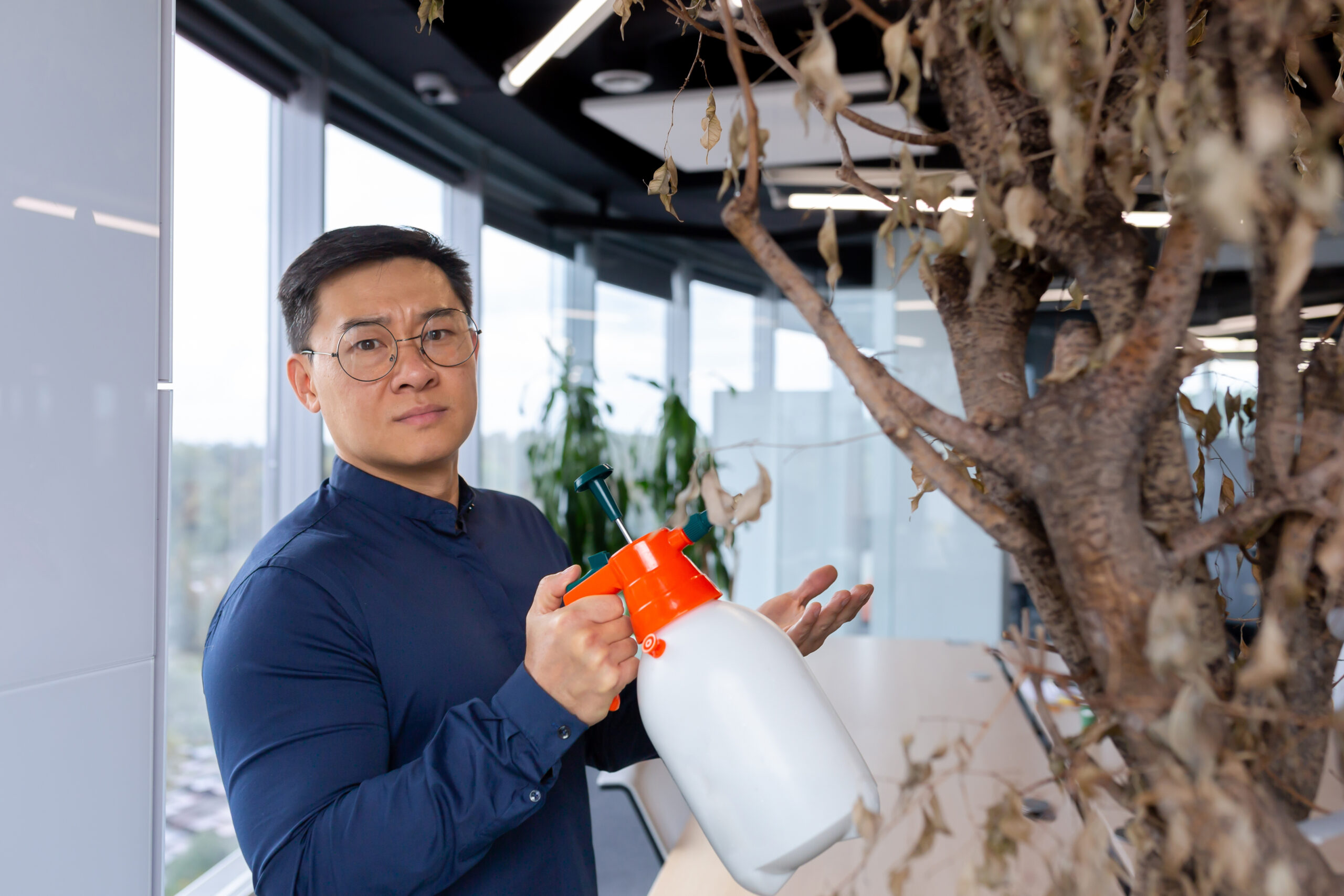
Plant decline in offices is rarely immediate. It starts quietly, in ways that are easy to miss. Leaves hold their colour but shrink slightly, growth slows and watering routines remain unchanged even though the plant’s needs have already shifted.
Fact: most plant decline in low-light environments is caused by placement, not neglect.
A few metres from a window can completely change performance. So can a small shift in layout that alters how light moves through a space. Over time, those small changes accumulate until the plant is no longer in the environment it was originally suited for.
Sydney micro-story: the corridor that kept failing
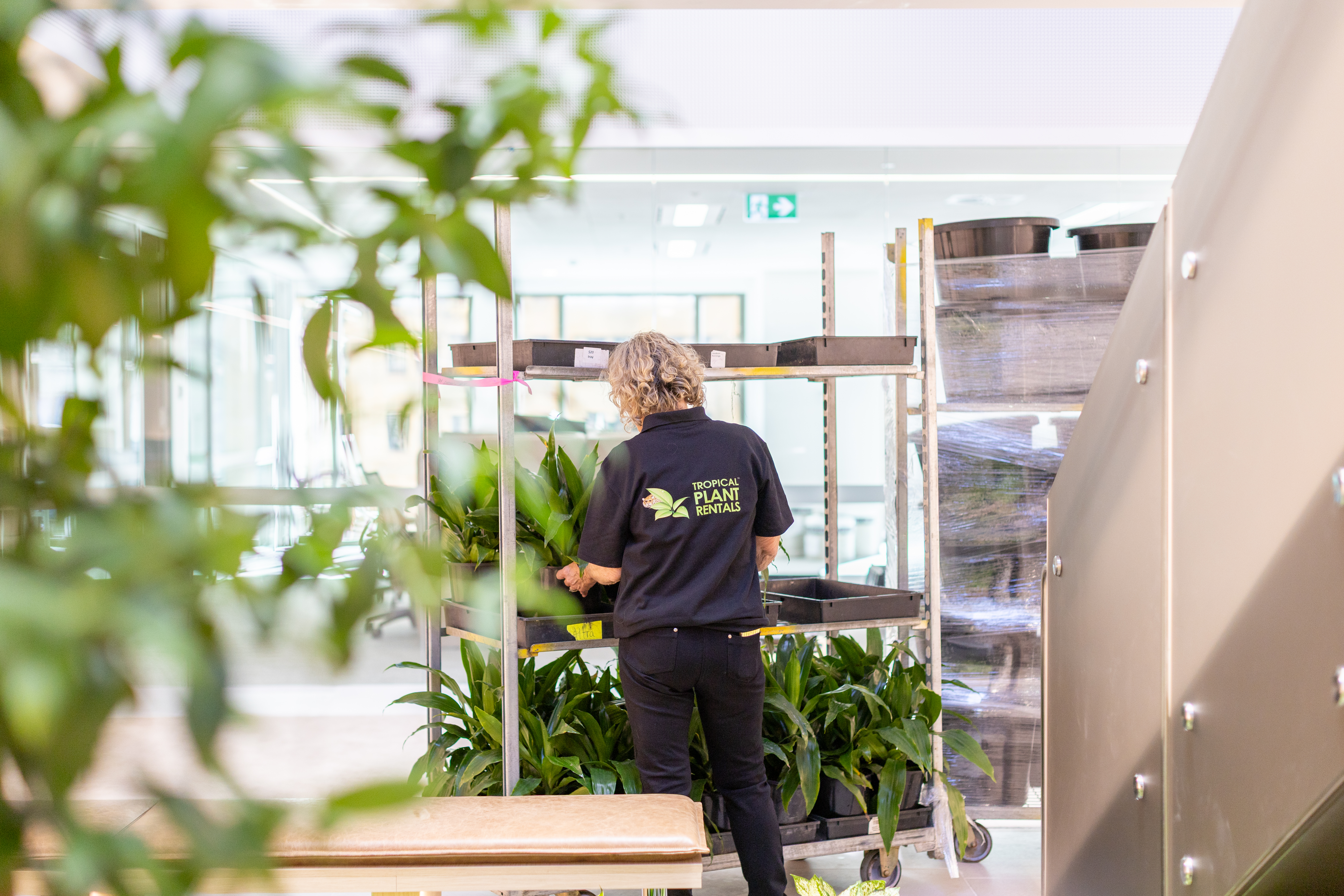
Another Sydney office had a long internal corridor that had been planted twice before Tropical Plant Rentals come onboard. Both times, the plants were replaced within months.
The assumption was simple: the corridor was too dark. But when observed across the day, the reality looked different. Light entered from one end only and disappeared entirely by late morning.
By the afternoon, when checks were usually done, the space looked unchanged. But the plants had already spent most of the day in conditions far lower than expected.
Once shade-tolerant species were introduced and placement shifted closer to the light source, the corridor stopped being a problem space. Nothing about the building changed — only the reading of it did.
When the match is right
When plants are properly matched to their environment, the result is subtle. Nothing announces itself. A corridor feels less harsh, a meeting room feels less sealed and a reception area settles without drawing attention.
People rarely notice the plants directly. They just notice that the space feels easier to move through. And then, over time, even that awareness fades — which is usually how you know it’s working.
Frequently asked questions
Why do office plants decline slowly instead of failing quickly?
Because most are placed in conditions that are only slightly unsuitable. The mismatch builds gradually over time rather than causing immediate collapse.
What plants work best in low-light office spaces?
ZZ plants, snake plants, Dracaena varieties, Chinese evergreen and cast iron plants are commonly used because they tolerate lower light conditions reliably.
Can plants survive in windowless offices?
Some shade-tolerant plants can survive under artificial lighting, but all plants still require some usable light to remain healthy long term.