Remember the last time you walked through a park and felt your shoulders drop a little? Your focus sharpen. Your breathing slow.
That response isn’t accidental. It’s biophilia – the human instinct to seek connection with nature.
In commercial architecture and workplace design, this instinct is now being intentionally brought back inside through biophilic design: the integration of natural systems, materials and patterns into built environments.
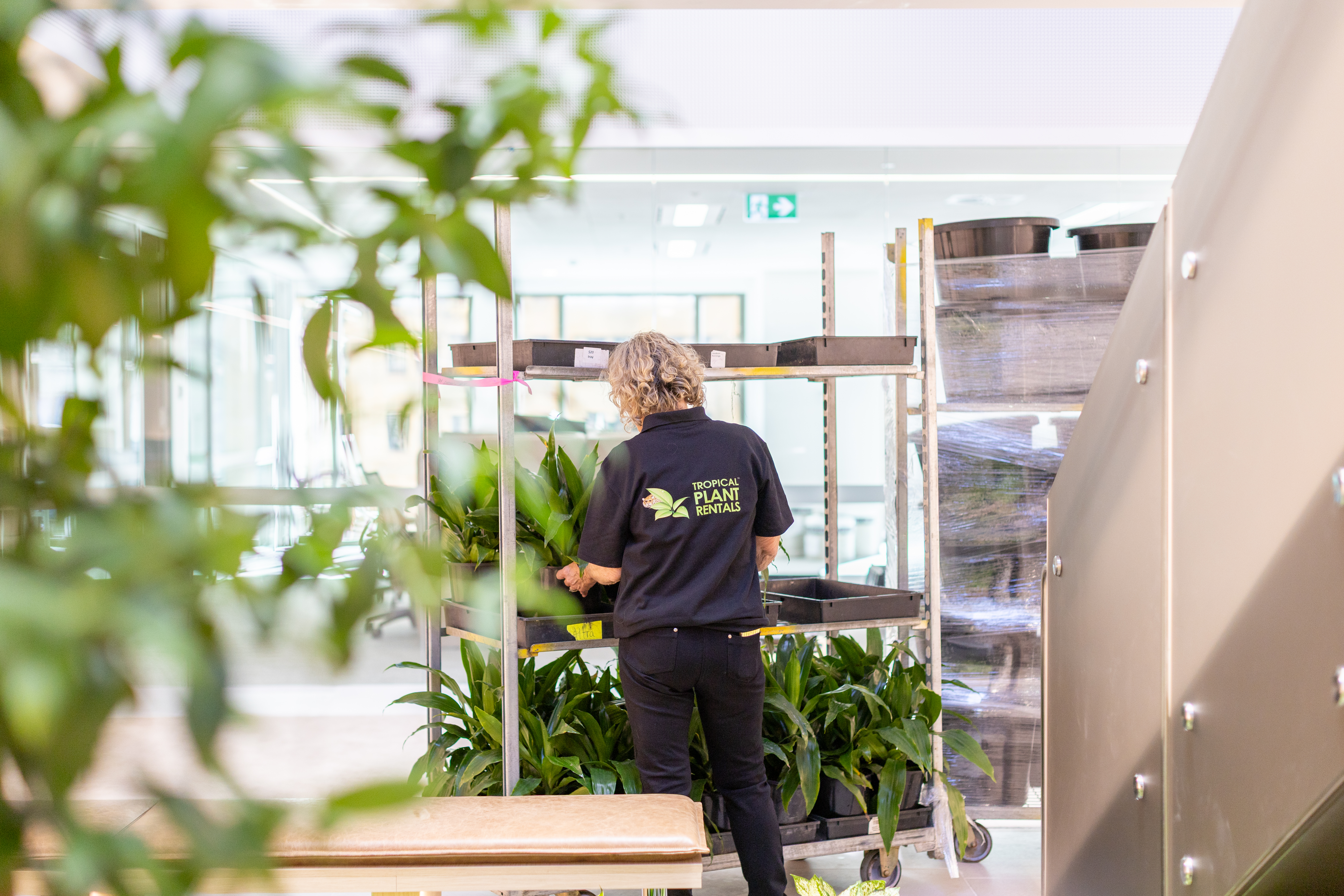
As Tropical Plant Rentals Managing Director & Co-owner Mitchell Reid explains:

“The most consistent thing we see is instinctive behaviour change. People don’t need instruction. They naturally move toward the plants. It changes how a space is used almost immediately.”
That behavioral shift is at the core of what makes biophilic design so powerful. It doesn’t force change. It invites it.
More than decoration: designing how people feel
Biophilic design is often misunderstood as styling – a few plants in a corner, a green wall for impact.
But in practice, it is far more deliberate.
As Mitchell puts it:
“We don’t see plants as decoration. We see them as part of how people experience a building. When they are done properly, they change everything around them.”
This thinking moves plants from aesthetic objects to functional design elements that influence movement, mood and interaction within a space.
At its core, biophilic design typically draws on three principles:
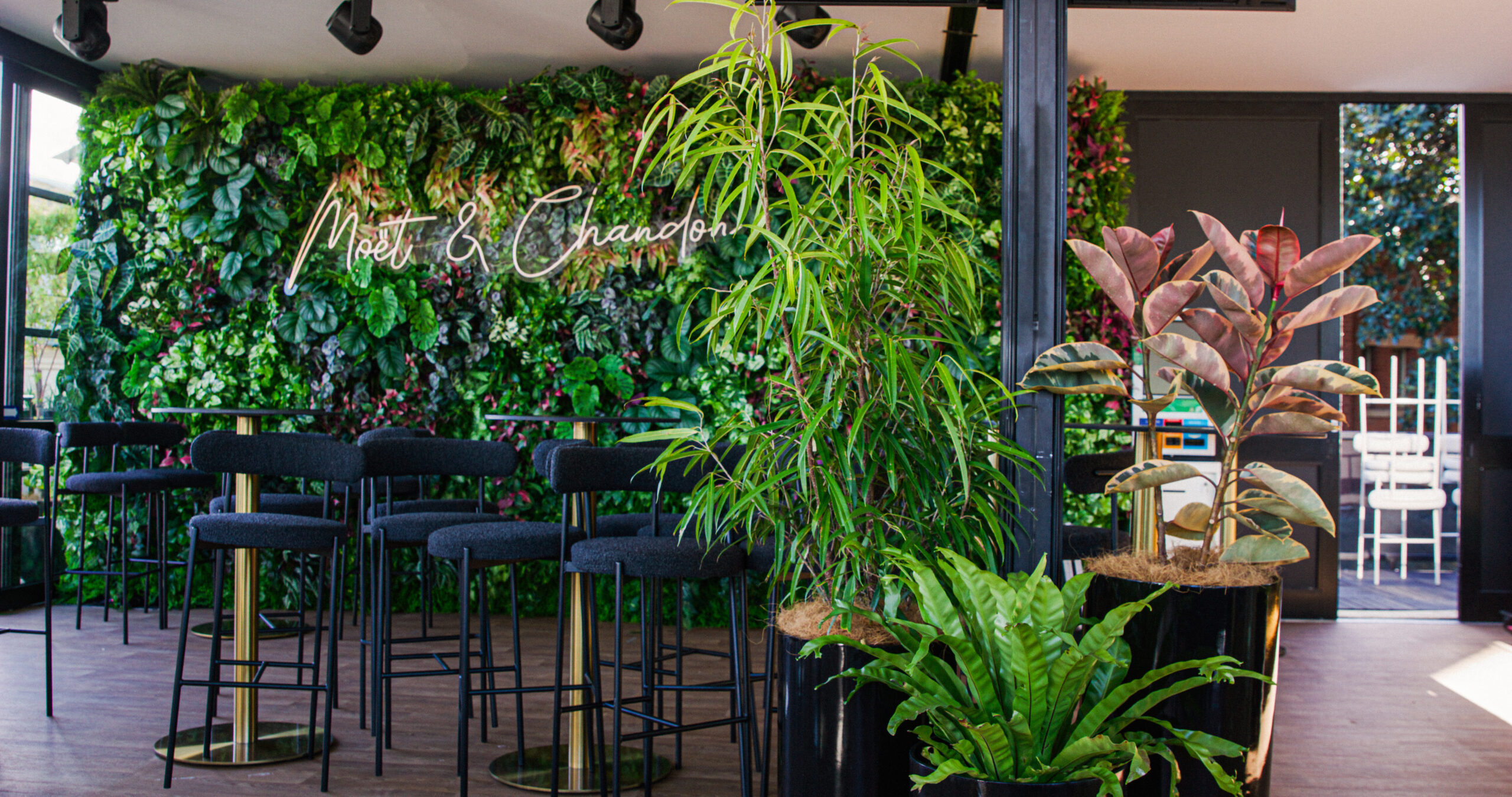
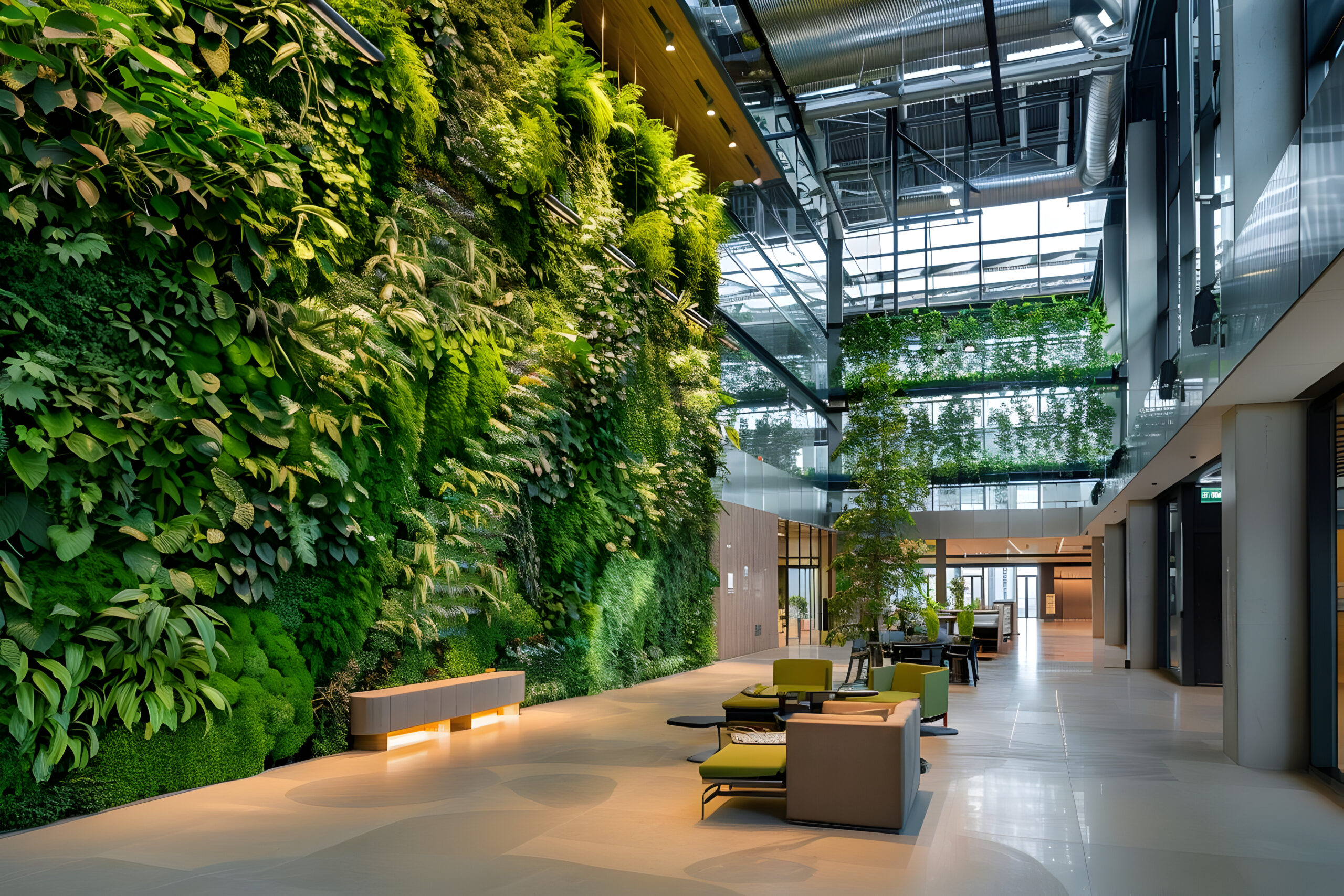
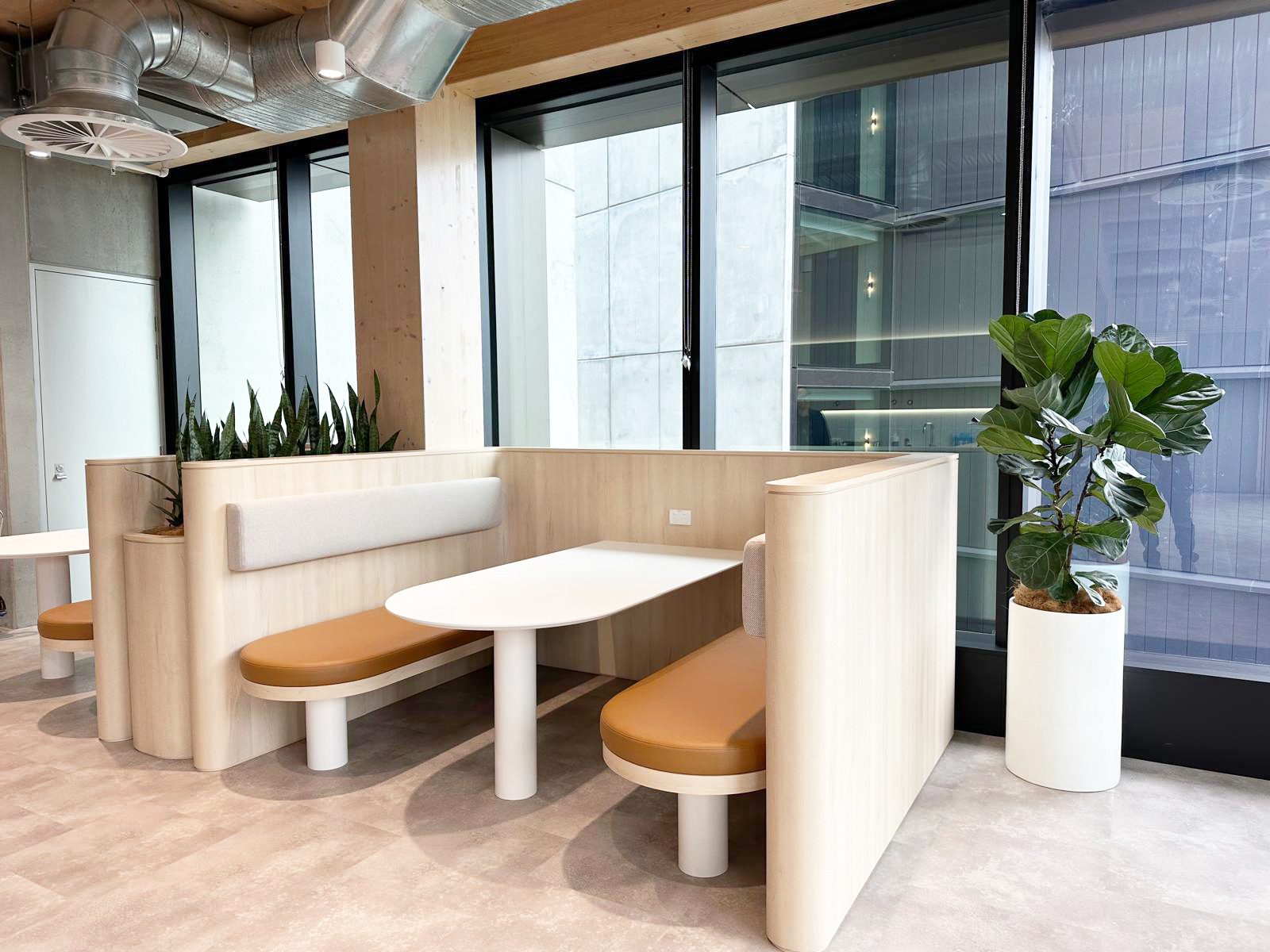
- Nature in the space – living plants, trees, green walls and water features
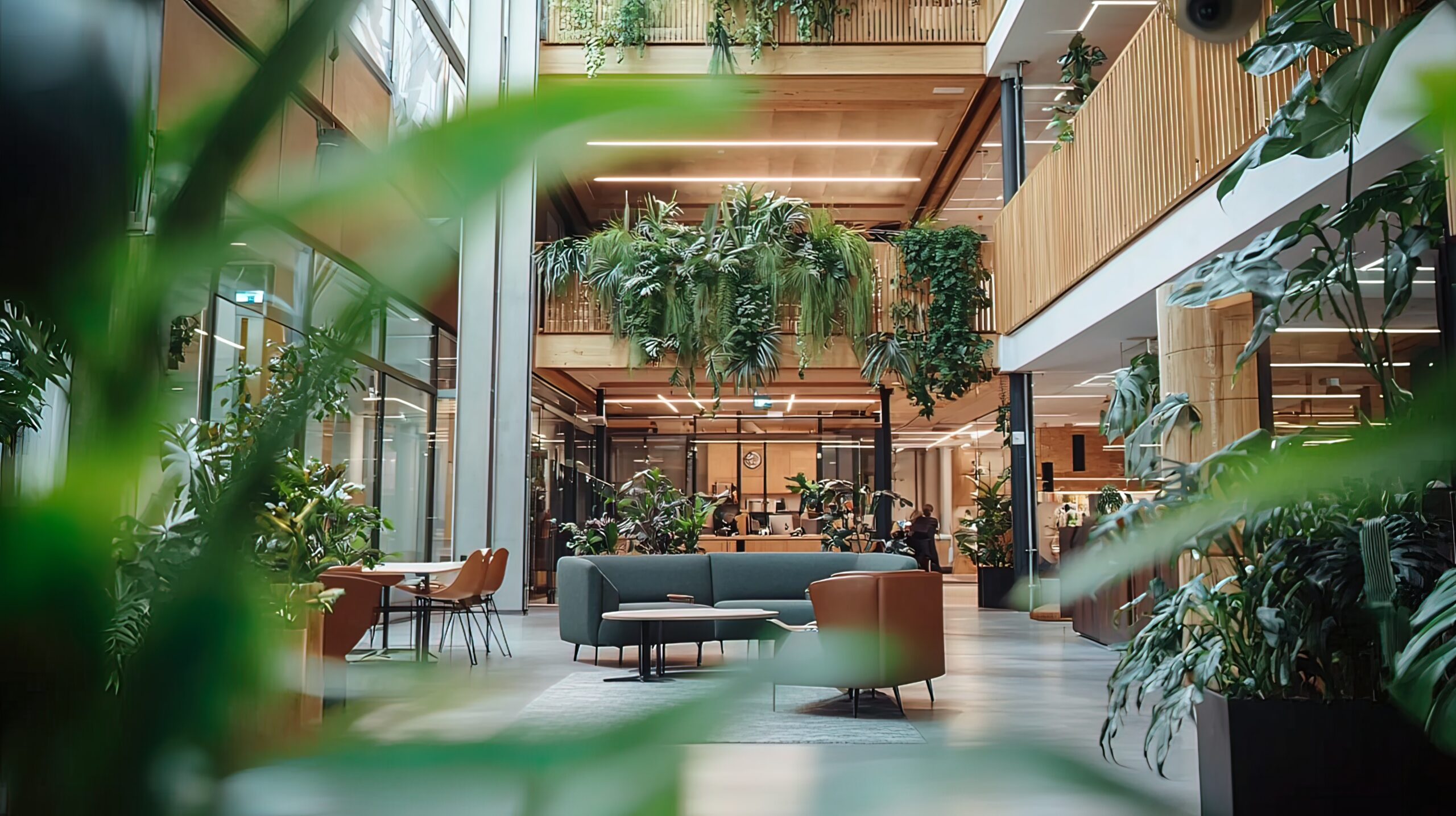
- Natural analogues – timber, stone, organic textures and nature-inspired patterns
- Nature of the space – light, openness, refuge and spatial flow that mirrors natural environments
Together, these elements create environments that feel calmer, more human and more intuitive to occupy.
Nature of the space: how environments shape behaviour
This layer is less visible but often the most powerful.
It is about spatial experience:
- where people feel comfortable sitting
- how far they can see through a space
- whether a space feels open or protective
- where people naturally pause, retreat or gather
We see this constantly in workplaces.
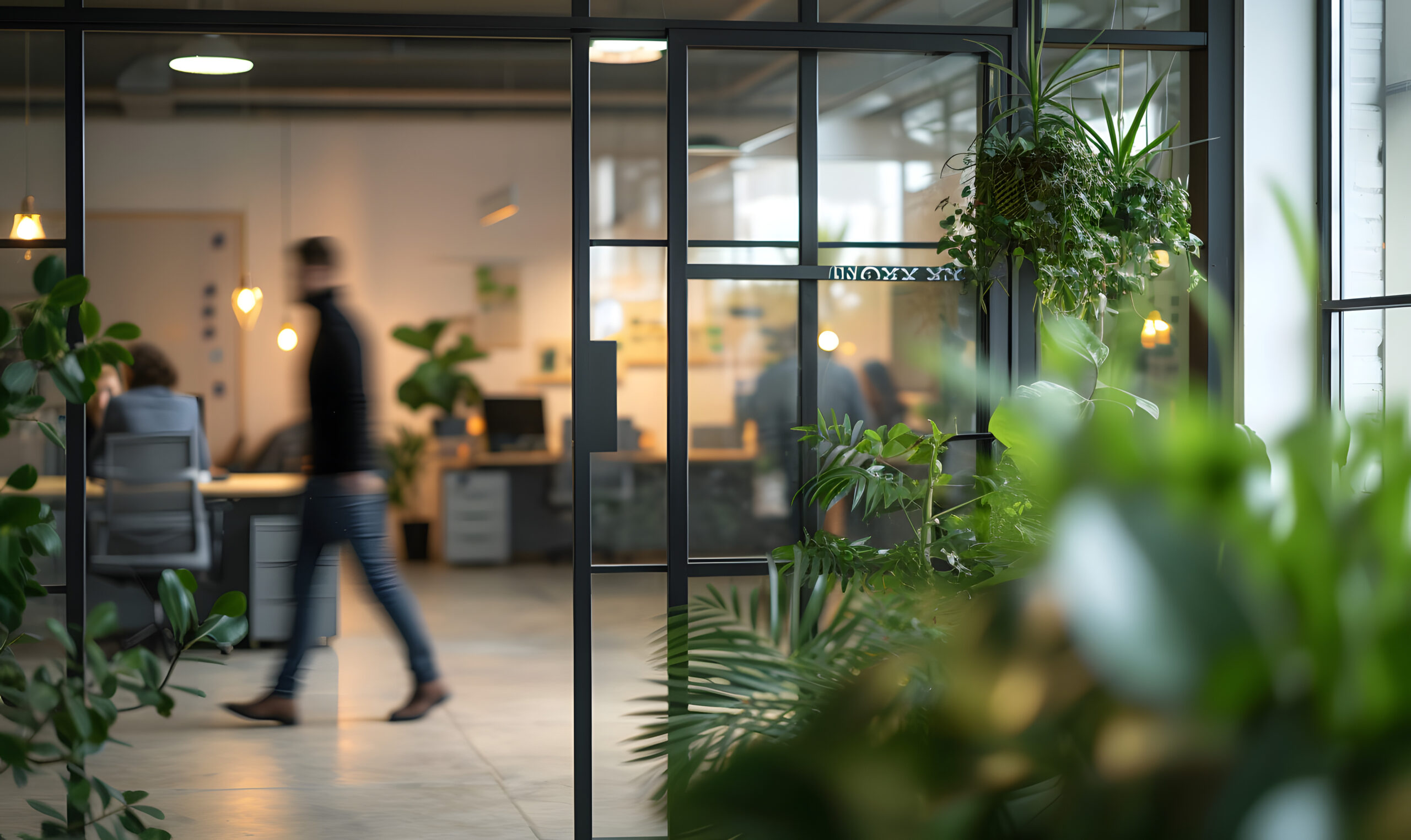
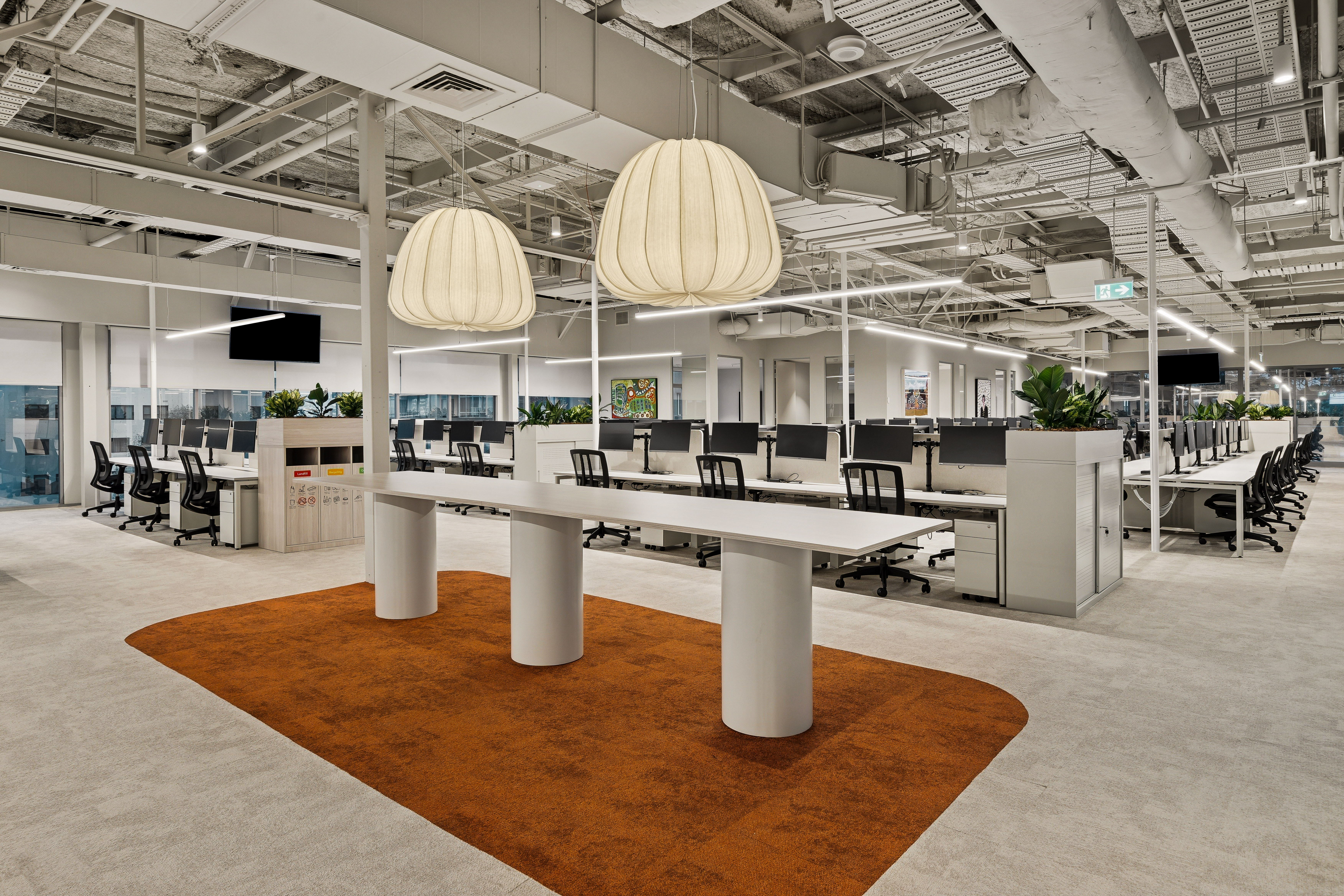
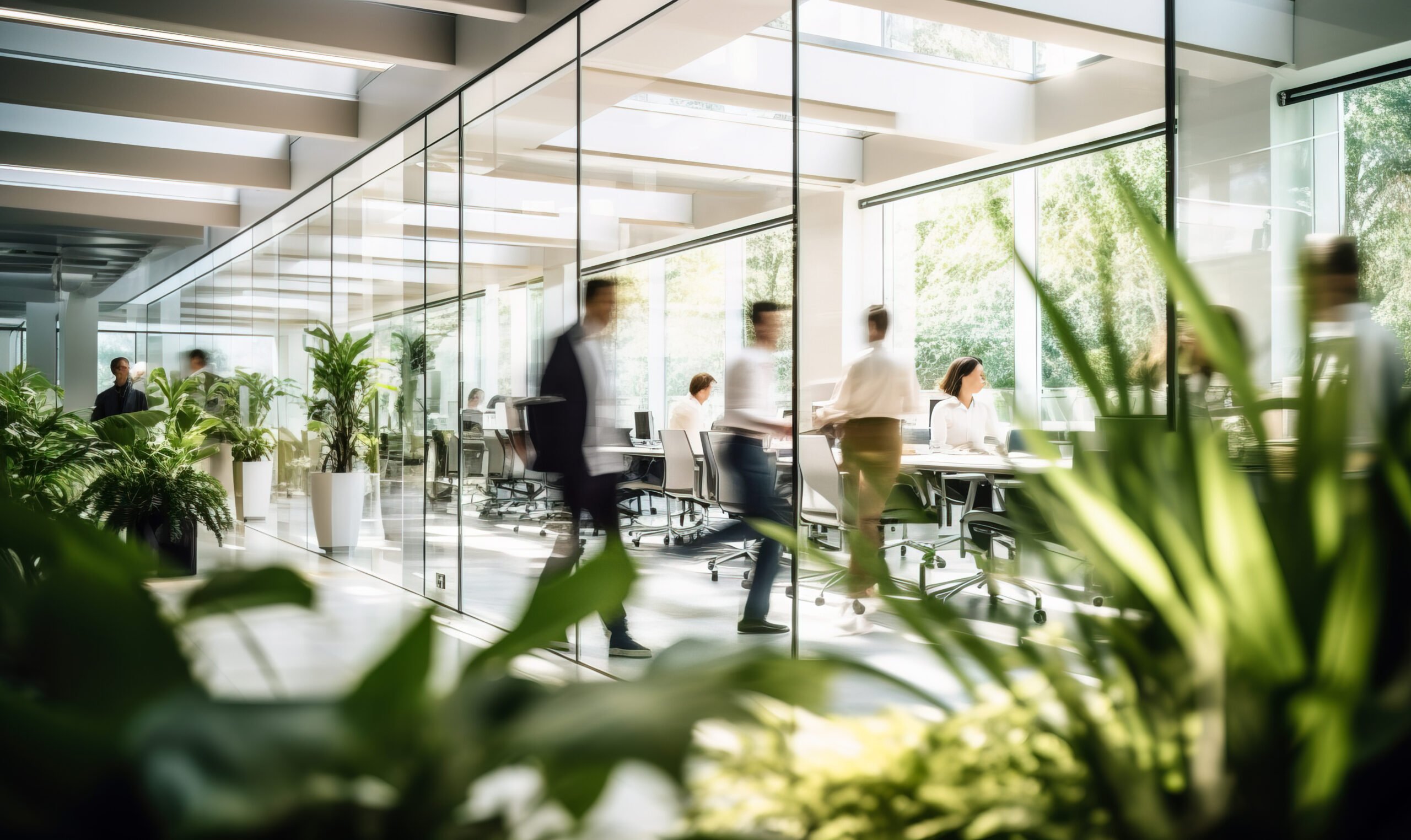
A planted corner becomes a natural meeting point without signage. A green buffer along circulation creates slower, more comfortable movement. A breakout space with planting becomes a place people choose, not are directed to.
These behaviors’ are not designed through instruction. They emerge through experience.
What the research tells us about plants in workplaces
The impact of indoor plants is one of the most consistently studied areas of biophilic design.
Across multiple studies:
- Productivity increases of up to 15% have been recorded in green office environments (University of Exeter, 2014)
- Workplace wellbeing improvements of 6–13% have been reported in environments with natural elements (Human Spaces Report, 2015)
- Stress reduction of up to 37% has been observed in environments with indoor plants (Journal of Physiological Anthropology, 2010)
- Improved attention restoration and cognitive recovery is linked to exposure to natural stimuli (Kaplan & Kaplan, Attention Restoration Theory)
While results vary by context, the direction is consistent.
Nature improves how people feel and how they perform.
The measurable impact of nature indoors
Beyond spatial behaviour and psychology, biophilic design delivers tangible workplace outcomes.
We see it in how people behave:
- Meetings naturally shift into planted or daylight-filled zones
- Breakout areas become actively used rather than decorative
- People spend more time in restorative environments
- Clients respond positively to calmer, more welcoming interiors
Nature doesn’t just change how a space looks. It changes how it functions.
A personal philosophy that extends beyond projects
For Mitchell, biophilic design is not just professional practice – it is personal.
As a father of two, he has filled both his home and his children’s schools with plants, ensuring they experience the benefits of natural environments daily.
This reflects a deeper belief: these environments should not be reserved for premium workplaces or flagship developments. They should be part of everyday life – in offices, schools, hospitals and homes.
When children grow up surrounded by natural elements, calm spaces and living systems, it becomes their baseline, not a luxury.
That shift in expectation is where long-term change begins.

From design concept to lived experience
In practice, successful biophilic design is never left to chance.
It requires:
- Correct plant selection for light and climate conditions
- Integration with lighting, acoustics and materials
- Ongoing maintenance to ensure longevity
- Collaboration between businesses/clients, designers, installers and building operators
Without this, even the most beautiful installation will decline over time.
When done properly, however, the result is consistent: spaces that feel alive, responsive and easier to exist within.
We’ve seen sterile corporate interiors transform into places people want to gather, think and recover. Not because of dramatic structural change but because of intelligent layering of natural systems.
The future of biophilic workplaces
As workplaces continue to evolve, biophilic design is becoming less of a feature and more of a foundation.
From modular green installations to indoor planting systems designed for flexible work environments, the focus is shifting toward adaptability and long-term sustainability.
The most successful spaces are no longer those that simply look impressive on day one – but those that continue to support the people inside them every day after.
Because at its core, biophilic design is not about plants.
It is about people.
Frequently asked questions
Is biophilic design only suitable for large or expensive offices?
No. Biophilic design can be scaled to suit any budget. Even small interventions such as potted plants, natural textures or improved light access can make a meaningful difference to how a space feels and functions.
Do indoor plants really improve workplace productivity?
Research suggests that workplaces with natural elements like plants can improve wellbeing and support productivity. Employees often report better focus, reduced stress and higher satisfaction in greener environments.
What is biophilic design in simple terms?
Biophilic design is the practice of incorporating natural elements such as plants, daylight, organic materials and nature-inspired forms into buildings to improve wellbeing and the way people experience indoor spaces.